What the Wood Remembers

Written by

Koshiki

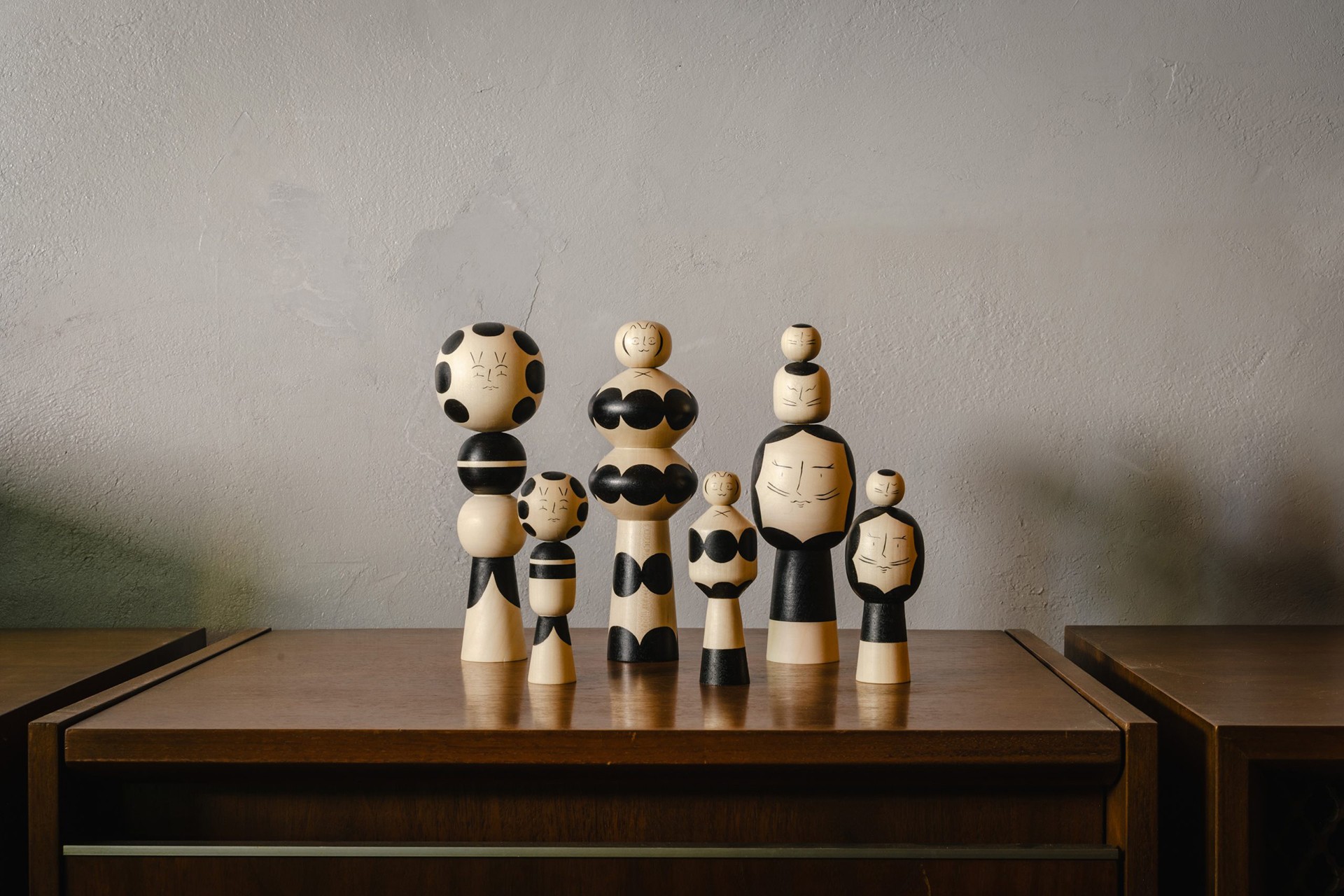
In the summer of 2024, Charles Bataillie, founder of Dejima Company, brought Séverin Millet to Naruko-onsen — a remote hot spring village in the mountains of Tōhoku, and the heartland of kokeshi craft. Together with Sakurai Kokeshiten, a family-run atelier preserving one of Japan's rarest woodworking traditions, they created an entirely new collection of contemporary kokeshi. This interview traces that journey.
Originally published in Japanese by Koshiki, an organisation dedicated to preserving and promoting the art of kokeshi. We are grateful to them for having initiated this conversation, and offer here an English translation for our international audience.


What first sparked your interest in Japanese crafts?

Charles Bataillie — My first real encounter with Japanese craft came through ukiyo-e prints. As a child, I remember being mesmerized, and sometimes even a little frightened, by Kuniyoshi's fantastic scenes. Over time, my curiosity shifted from the pictures themselves to the process behind them: paper makers, pigment makers, carvers, and printers collaborating with the artist to bring a single image to life. What struck me most was realizing that a single print was never one person's work.

What I still love about ukiyo-e today is its spirit: popular, accessible, and made to be shared widely. It's an approach that continues to inspire the way I think about creating objects with artists and artisans.

What inspired you to open Dejima Store in Paris?

C.B. — The name came first, really. Dejima, the trading post in Nagasaki Bay that once connected Japan with Europe, felt like the right frame for what I wanted to do: create a space where Japanese crafts and European illustration could meet, and produce something neither would alone.

Our Paris address serves both as a concept store and a curatorial space, hosting exhibitions, product launches, and cultural events that showcase the artisans' stories, techniques, and creative process. The goal is to show that craft is not a static tradition, but a living practice that continues to evolve through cross-cultural collaboration.
What was your first impression when you saw the kokeshi?

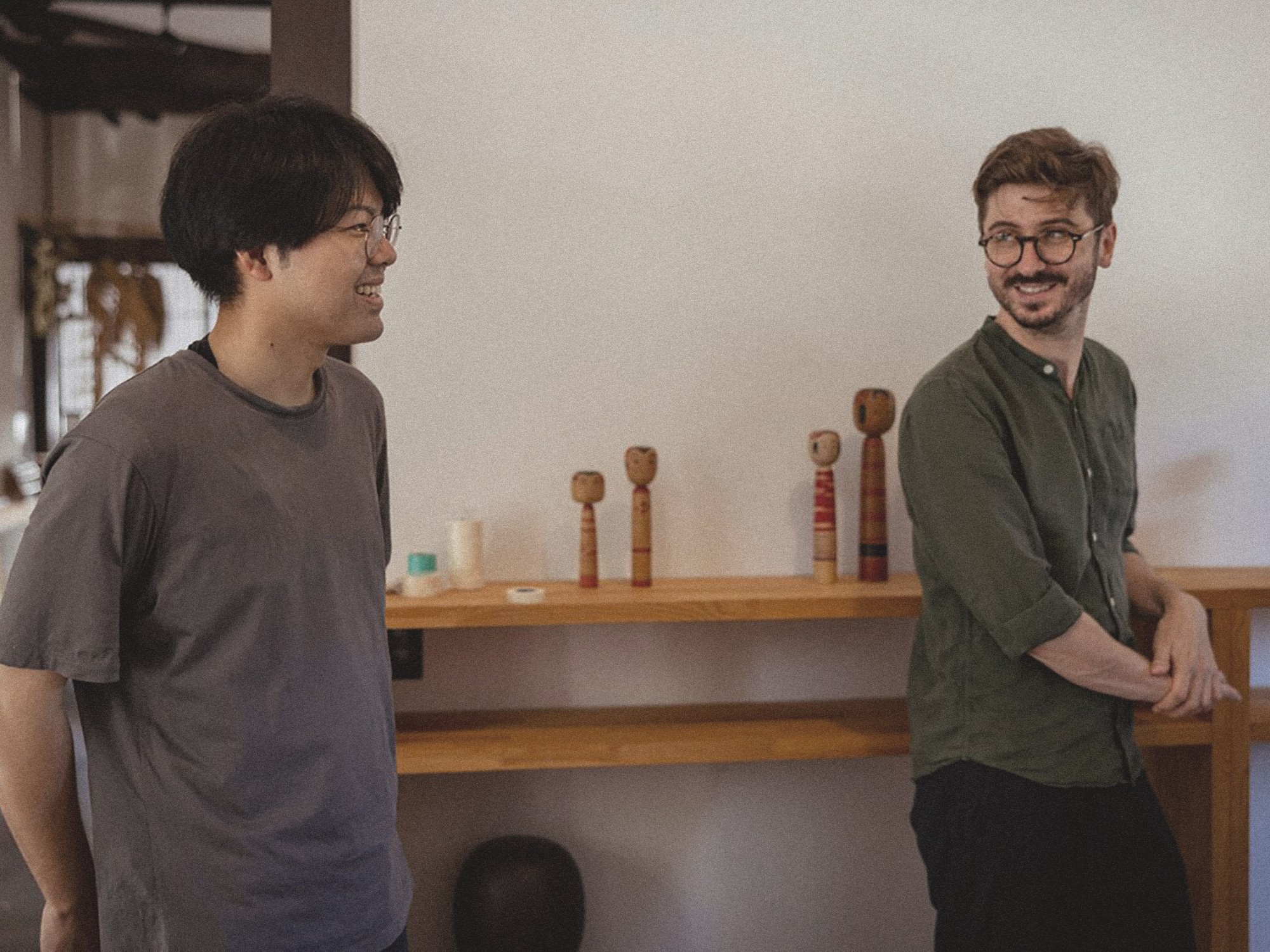
C.B. — I've always loved Japanese toys, I even have a small personal collection, ranging from venerable inu hariko to the hilarious kaiju rubber figures of the 1960s. So when I arrived in Naruko, I thought I was already familiar with kokeshi. I was immediately struck by the incredible variety of forms and designs, especially at the Sakurai workshop, where each generation has remained committed to innovation.

Kokeshi have also shifted in meaning over time: dolls for little girls, gifts for newborns, onsen souvenirs, and now decorative objects. Kokeshi are not merely toys; they are wooden witnesses to the history of the places where they are made.

What made you decide to collaborate with Sakurai Kokeshi?

C.B. — What inspires me most is working with artisans who are curious and willing to take risks, especially with artists from abroad. In a world where Japanese craft can sometimes feel insular, meeting a family like the Sakurais, who experiment freely without losing their footing in tradition, was genuinely rare.

Why did you choose Séverin Millet as the artist for this collaboration?

C.B.— I chose Séverin because he is both experienced and remarkably versatile. He shifts between figurative and abstract, between two and three dimensions: drawing, painting, ceramics, wood sculpture. And throughout his career he has made small figurines that are, in a way, French cousins of the kokeshi.
What was the main reason that made you decide to start this collaboration with Sakurai Kokeshi?
Did you feel any affinity with your own previous works?

Séverin Millet — This collaboration came through a proposal from Dejima Company, and the idea appealed to me straight away — bringing Japanese craftsmanship and international artists together. I was thrilled by the idea of traveling to Japan to meet the Sakurai family and discover their way of working.

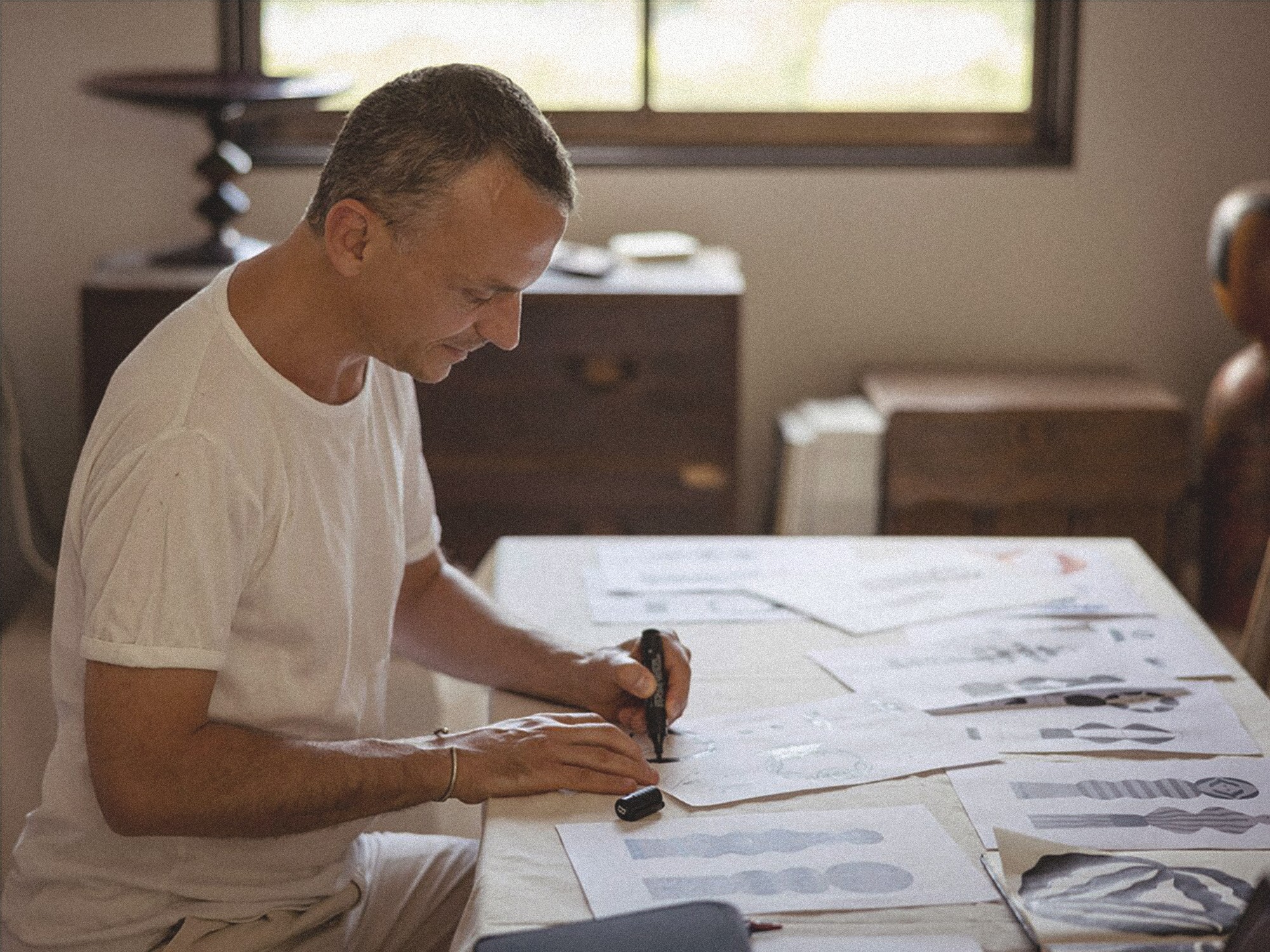
Before this project, I knew little about kokeshi. As I learned more, I was captivated by their diversity, their refinement, and the quiet presence these small wooden figures have. I quickly saw a connection with my own work. From early on, I've been drawn to stylized figures — the way form alone can carry expression. I've often created series of figures, whether in screen printing or sculpture, and one of these series was even produced on a very large scale. In kokeshi I found something familiar: figures standing side by side, each complete, each distinct.

What impressions did you have of the Sakurai family's work, and of Akihiro and Naomichi Sakurai?

C.B. — What struck me first was the precision — every curve, every brushstroke considered. Observing Akihiro-san and Naomichi-san work together gave a clear sense of how knowledge and technique are passed down across generations. Akihiro-san holds the technique, precisely, uncompromisingly. Naomichi-san pushes at the edges of it. Watching them work together, you understood how something survives across six generations.

S.M. — In France, it is rare to meet artisans who come from a lineage spanning six generations. From the first visit, watching them work was enough. I have great admiration for the way they keep a traditional art form alive while allowing each generation to bring its own sensibility. Their style felt immediately familiar to me: spare, precise, nothing wasted.
How did the collaboration actually proceed?

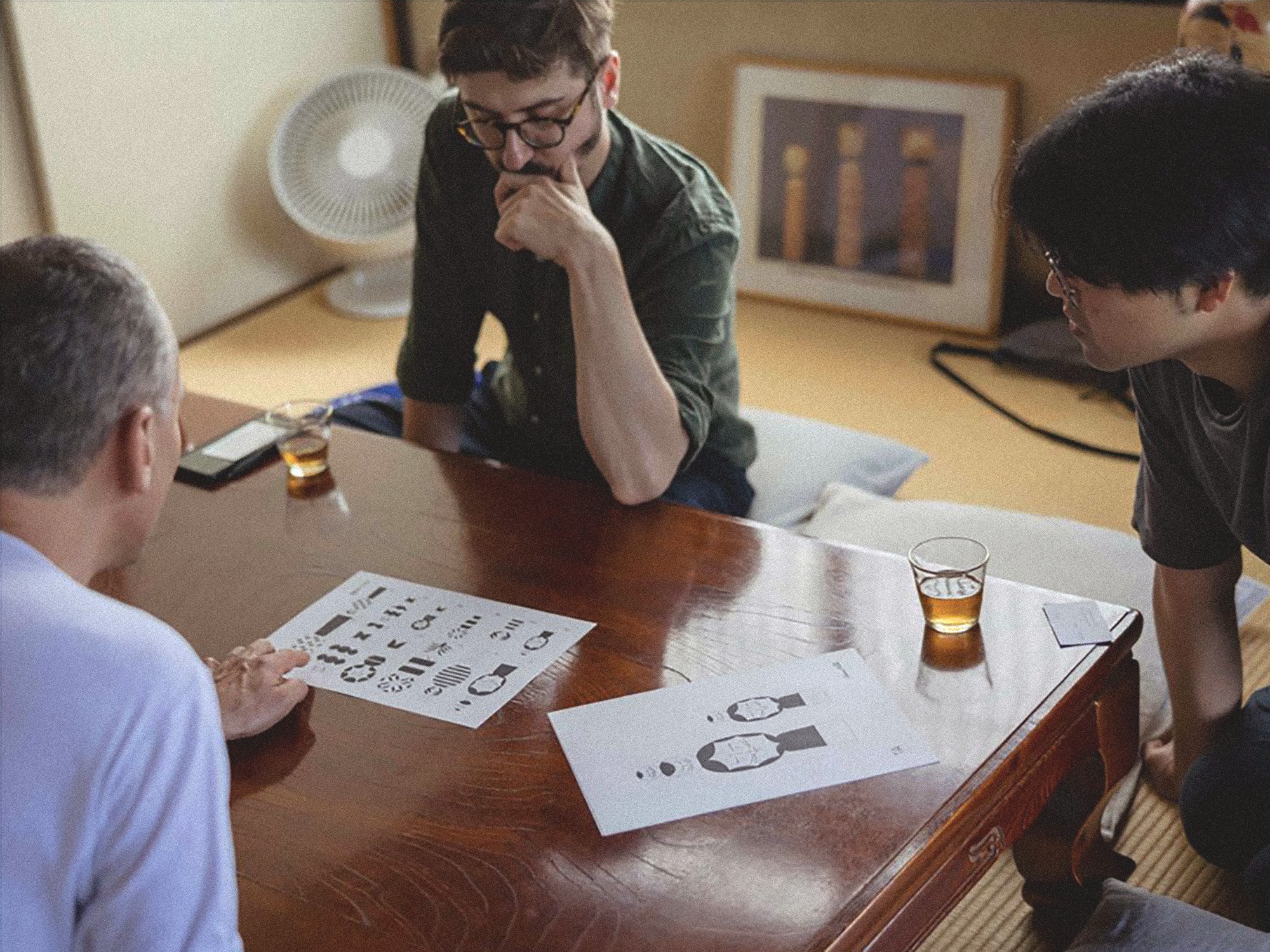
C.B. — The collaboration took place during a residency in Naruko. For one week, Séverin and I lived alongside the Sakurai family, who brought us into their daily life and showed us everything — from cultivating mizuki wood to painting faces. Without that proximity, the collection wouldn't exist. The hardest thing for me was slowing down. Here, the wood sets the pace — you don't rush it.

S.M. — The real challenge was staying true to my own work while respecting what makes Sakurai kokeshi what they are. I started by watching: their techniques, the rhythm of the work, where the constraints were. From this foundation, I began imagining new forms and designs, letting their gestures and economy of means guide me, while making sure each figure stood on its own.

What impression did you have of the kokeshi that resulted from this collaboration?

C.B. — What struck me most was watching Naomichi-san translate Séverin's drawings into paint — the drawings stayed themselves, but became something else too. To me, this was the heart of the collaboration: each kokeshi is both of them at once — you can't separate the drawing from the hand that made it.

How were the kokeshi received in France?

C.B. — Our customers in the Paris shop loved the originality of the designs and the quality of the craftsmanship. This collection is also a way of showing that kokeshi-making is still evolving, even if only a handful of families are keeping it going. One of the biggest challenges in France is helping people understand that these new kokeshi are rarer and more valuable than the old pieces that flood flea markets. Sadly, some sellers take advantage of this, overpricing low-quality items by presenting them as "vintage." Buying from living artisans matters: not as a moral stance, but because without it, the craft simply stops.

Our thanks to Koshiki for initiating this conversation, and to the Sakurai family for their warm welcome in Naruko.


Charles Bataillie — Dejima Company

Art director and curator with a background in publishing and illustration. Co-founder of Dejima Store in Paris, he now leads Dejima Company from Taipei, overseeing the brand's creative direction, collection development, and international distribution.

Séverin Millet — Artist

French painter and sculptor known for his bold, colourful figures in wood, ceramics and metal — some small enough to sit on a shelf, others large enough to inhabit a park — his work is shown in exhibitions and galleries around the world.

What the Wood Remembers

Written by

Koshiki

In the summer of 2024, Charles Bataillie, founder of Dejima Company, brought Séverin Millet to Naruko-onsen — a remote hot spring village in the mountains of Tōhoku, and the heartland of kokeshi craft. Together with Sakurai Kokeshiten, a family-run atelier preserving one of Japan's rarest woodworking traditions, they created an entirely new collection of contemporary kokeshi. This interview traces that journey.

Originally published in Japanese by Koshiki, an organisation dedicated to preserving and promoting the art of kokeshi. We are grateful to them for having initiated this conversation, and offer here an English translation for our international audience.


What first sparked your interest in Japanese crafts?

Charles Bataillie — My first real encounter with Japanese craft came through ukiyo-e prints. As a child, I remember being mesmerized, and sometimes even a little frightened, by Kuniyoshi's fantastic scenes. Over time, my curiosity shifted from the pictures themselves to the process behind them: paper makers, pigment makers, carvers, and printers collaborating with the artist to bring a single image to life. What struck me most was realizing that a single print was never one person's work.

What I still love about ukiyo-e today is its spirit: popular, accessible, and made to be shared widely. It's an approach that continues to inspire the way I think about creating objects with artists and artisans.

What inspired you to open Dejima Store in Paris?

C.B. — The name came first, really. Dejima, the trading post in Nagasaki Bay that once connected Japan with Europe, felt like the right frame for what I wanted to do: create a space where Japanese crafts and European illustration could meet, and produce something neither would alone.

Our Paris address serves both as a concept store and a curatorial space, hosting exhibitions, product launches, and cultural events that showcase the artisans' stories, techniques, and creative process. The goal is to show that craft is not a static tradition, but a living practice that continues to evolve through cross-cultural collaboration.

What was your first impression when you saw the kokeshi?

C.B. — I've always loved Japanese toys, I even have a small personal collection, ranging from venerable inu hariko to the hilarious kaiju rubber figures of the 1960s. So when I arrived in Naruko, I thought I was already familiar with kokeshi. I was immediately struck by the incredible variety of forms and designs, especially at the Sakurai workshop, where each generation has remained committed to innovation.

Kokeshi have also shifted in meaning over time: dolls for little girls, gifts for newborns, onsen souvenirs, and now decorative objects. Kokeshi are not merely toys; they are wooden witnesses to the history of the places where they are made.

What made you decide to collaborate with Sakurai Kokeshi?

C.B. — What inspires me most is working with artisans who are curious and willing to take risks, especially with artists from abroad. In a world where Japanese craft can sometimes feel insular, meeting a family like the Sakurais, who experiment freely without losing their footing in tradition, was genuinely rare.

Why did you choose Séverin Millet as the artist for this collaboration?

C.B.— I chose Séverin because he is both experienced and remarkably versatile. He shifts between figurative and abstract, between two and three dimensions: drawing, painting, ceramics, wood sculpture. And throughout his career he has made small figurines that are, in a way, French cousins of the kokeshi.

What was the main reason that made you decide to start this collaboration with Sakurai Kokeshi?
Did you feel any affinity with your own previous works?

Séverin Millet — This collaboration came through a proposal from Dejima Company, and the idea appealed to me straight away — bringing Japanese craftsmanship and international artists together. I was thrilled by the idea of traveling to Japan to meet the Sakurai family and discover their way of working.

Before this project, I knew little about kokeshi. As I learned more, I was captivated by their diversity, their refinement, and the quiet presence these small wooden figures have. I quickly saw a connection with my own work. From early on, I've been drawn to stylized figures — the way form alone can carry expression. I've often created series of figures, whether in screen printing or sculpture, and one of these series was even produced on a very large scale. In kokeshi I found something familiar: figures standing side by side, each complete, each distinct.

What impressions did you have of the Sakurai family's work, and of Akihiro and Naomichi Sakurai?

C.B. — What struck me first was the precision — every curve, every brushstroke considered. Observing Akihiro-san and Naomichi-san work together gave a clear sense of how knowledge and technique are passed down across generations. Akihiro-san holds the technique, precisely, uncompromisingly. Naomichi-san pushes at the edges of it. Watching them work together, you understood how something survives across six generations.

S.M. — In France, it is rare to meet artisans who come from a lineage spanning six generations. From the first visit, watching them work was enough. I have great admiration for the way they keep a traditional art form alive while allowing each generation to bring its own sensibility. Their style felt immediately familiar to me: spare, precise, nothing wasted.

How did the collaboration actually proceed?

C.B. — The collaboration took place during a residency in Naruko. For one week, Séverin and I lived alongside the Sakurai family, who brought us into their daily life and showed us everything — from cultivating mizuki wood to painting faces. Without that proximity, the collection wouldn't exist. The hardest thing for me was slowing down. Here, the wood sets the pace — you don't rush it.

S.M. — The real challenge was staying true to my own work while respecting what makes Sakurai kokeshi what they are. I started by watching: their techniques, the rhythm of the work, where the constraints were. From this foundation, I began imagining new forms and designs, letting their gestures and economy of means guide me, while making sure each figure stood on its own.

What impression did you have of the kokeshi that resulted from this collaboration?

C.B. — What struck me most was watching Naomichi-san translate Séverin's drawings into paint — the drawings stayed themselves, but became something else too. To me, this was the heart of the collaboration: each kokeshi is both of them at once — you can't separate the drawing from the hand that made it.

How were the kokeshi received in France?

C.B. — Our customers in the Paris shop loved the originality of the designs and the quality of the craftsmanship. This collection is also a way of showing that kokeshi-making is still evolving, even if only a handful of families are keeping it going. One of the biggest challenges in France is helping people understand that these new kokeshi are rarer and more valuable than the old pieces that flood flea markets. Sadly, some sellers take advantage of this, overpricing low-quality items by presenting them as "vintage." Buying from living artisans matters: not as a moral stance, but because without it, the craft simply stops.

Our thanks to Koshiki for initiating this conversation, and to the Sakurai family for their warm welcome in Naruko.


Charles Bataillie — Dejima Company

Art director and curator with a background in publishing and illustration. Co-founder of Dejima Store in Paris, he now leads Dejima Company from Taipei, overseeing the brand's creative direction, collection development, and international distribution.

Séverin Millet — Artist

French painter and sculptor known for his bold, colourful figures in wood, ceramics and metal — some small enough to sit on a shelf, others large enough to inhabit a park — his work is shown in exhibitions and galleries around the world.

出島有限公司

DEJIMA Co., Ltd.

F. 6, No. 71-5, Sec. 4,

Zhongxiao E. Rd., Da'an Dist.,

Taipei City 106, Taiwan

© 2026 — All rights reserved